A tank water heater may suit your home when stored supply and existing connections meet your needs. Tankless may fit when on-demand heating and installation requirements match your priorities. At Neighborhood Plumbing, our water heater services help you compare household demand, equipment compatibility, and maintenance.
Key Takeaways:
- Compare delivery limits: Neither design supports unlimited simultaneous hot-water use.
- Review installation work: Converting systems may require utility or venting changes.
- Consider repair: An equipment fault does not automatically justify replacement.
What Differences Matter Between Tank and Tankless Systems?
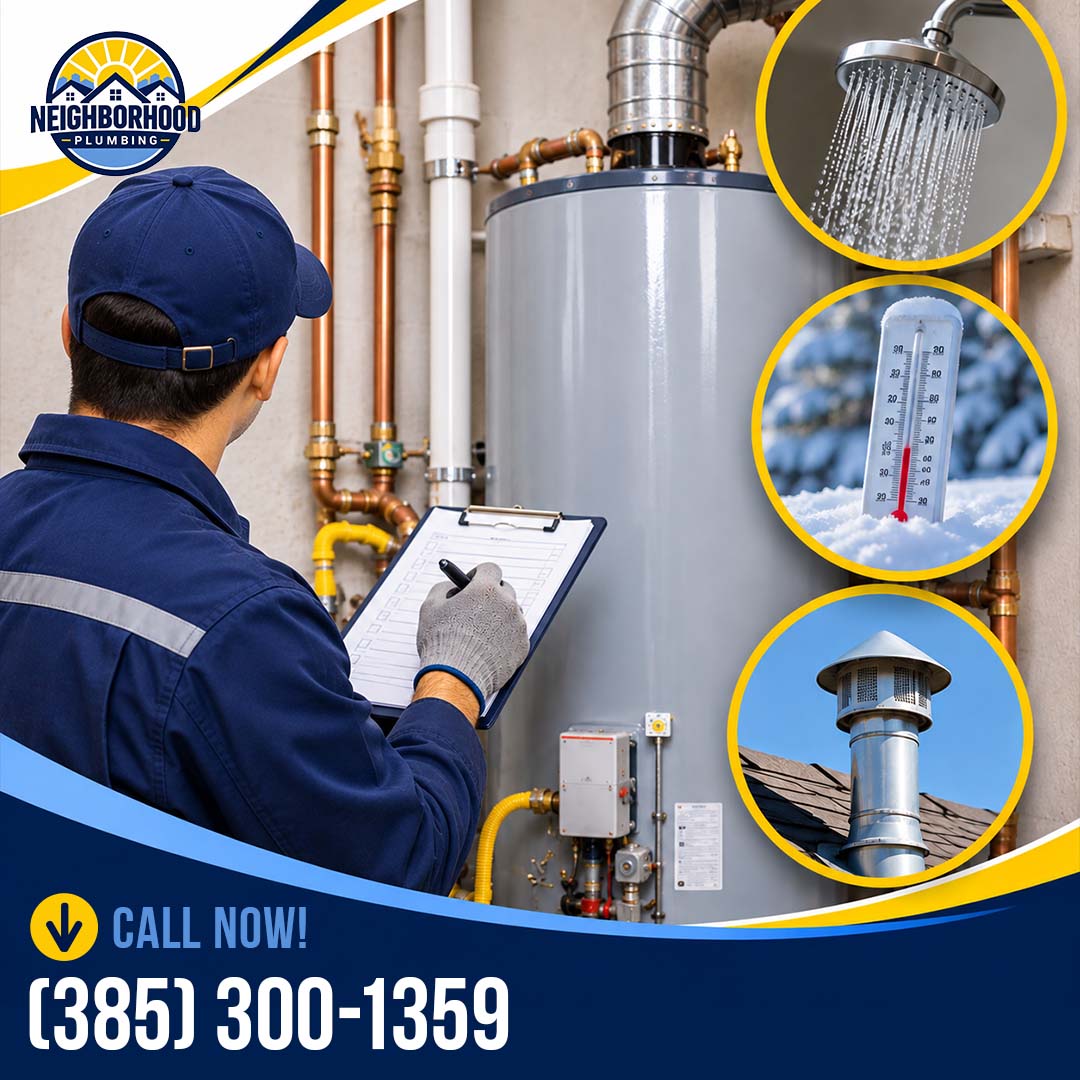
Tank water heaters store heated water, while tankless systems heat water during use. Storage models depend on stored supply and recovery capacity, meaning how quickly water is reheated. Tankless models depend on flow capacity at the required temperature rise, meaning the difference between incoming and heated-water temperatures.
The U.S. Department of Energy explains that gas-fired tankless systems reduce the standby heat losses associated with storing hot water. That feature alone does not establish how much a particular household might save.
How Do the Options Compare?
| Decision factor | Tank water heater | Tankless water heater |
| Hot-water supply | Stored supply; replenishment depends on recovery capacity | On-demand heating; simultaneous flow remains limited |
| Space | Room for the tank and service clearances | Often more compact; clearances still apply |
| Replacement work | Existing connections may suit a compatible model | Conversion may require utility or venting changes |
| Maintenance | Model-specific inspection and servicing | Model-specific servicing, including scale management where needed |
At Neighborhood Plumbing, we install, repair, replace, and maintain traditional and tankless water heaters. We help you weigh repair, replacement, and installation requirements.
Which Option Better Matches Your Household Priorities?
A compatible tank model deserves consideration when your current arrangement meets demand, and you prefer fewer installation changes. Tankless deserves consideration when on-demand heating or a smaller equipment footprint matters, provided the selected model can support your household’s overlapping hot-water use.
Keeping a compatible tank system may involve fewer changes than converting to tankless. However, a tank replacement still requires checking connections, clearances, and applicable requirements.
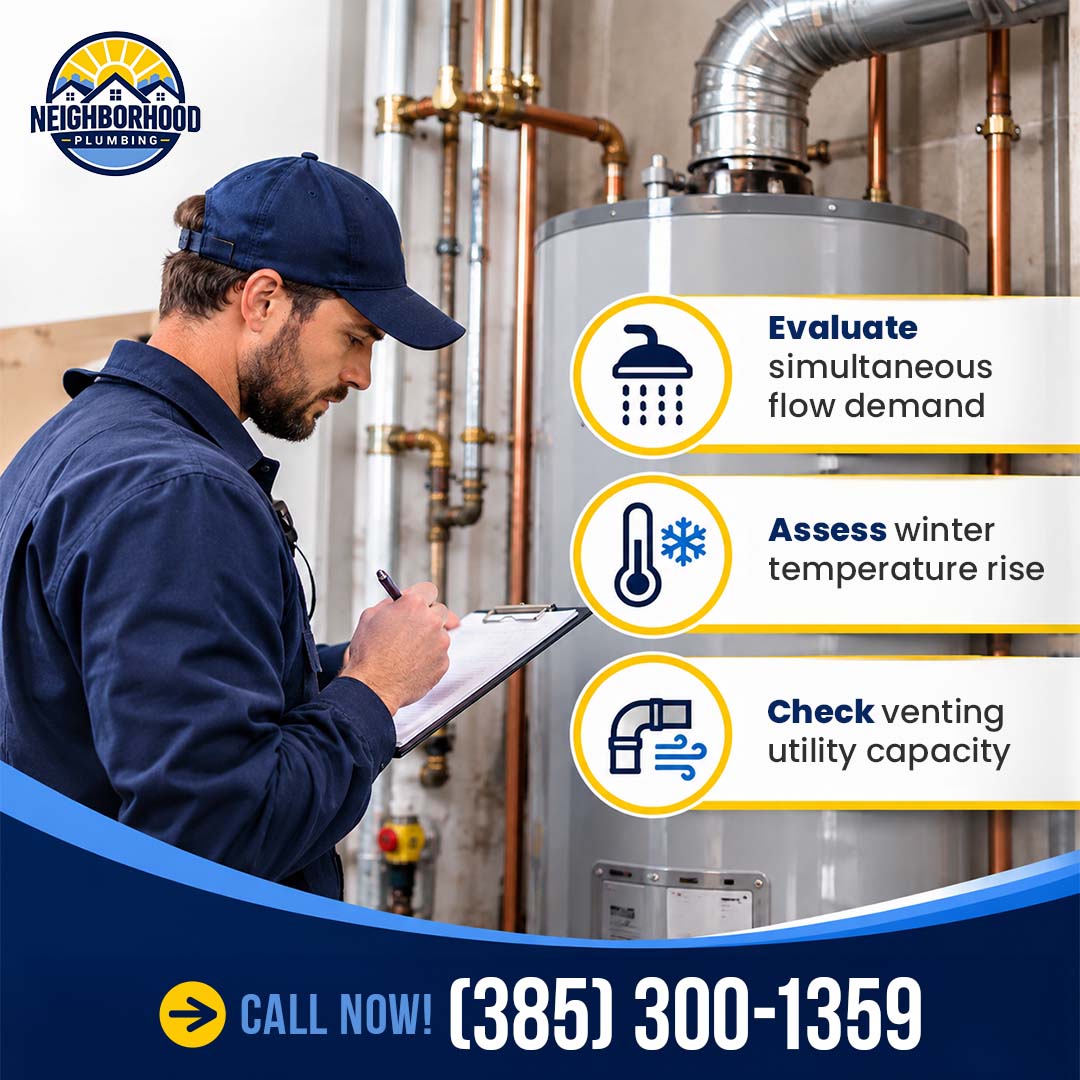
Before arranging tankless water heater installation in Utah, discuss performance under colder incoming-water conditions. DOE recommends evaluating gas-fired tankless capacity against simultaneous demand and winter incoming-water temperature. Manufacturer output charts help a plumber assess the proposed model.
What Should You Review Before Approving a Replacement?
A replacement proposal should explain why the selected system suits your household and what installation work is required. Compare equipment compatibility and the complete project scope. Water heater replacement cost in Utah depends on the model and required work, rather than the tank-versus-tankless label alone.
- Describe household use: Explain which showers, baths, and appliances operate together.
- Review installation changes: Ask about utility capacity, venting, and condensate disposal for models requiring drainage.
- Clarify ongoing care: Ask about manufacturer maintenance requirements and applicable warranty terms.
Permit requirements vary by jurisdiction and project scope. Warranty conditions vary by manufacturer and model.
Our owner, Chad Dunn, has worked in construction and service plumbing. At Neighborhood Plumbing, we explain recommendations in plain language so you can make an informed decision.
Should You Repair Your Current Heater Before Changing Systems?
A repair assessment is appropriate when hot-water performance changes without increased household demand. Leaks, unusual noises, and reduced hot water can be signs of a failing water heater, but symptoms alone cannot establish whether repair, replacement, or a different system is appropriate.
We repair traditional and tankless water heaters. If you need emergency water heater repair in Ogden, describe the problem and confirm current availability.
Frequently Asked Questions
Does tankless mean instant hot water at every faucet?
No. Tankless heating does not eliminate the wait for hot water to travel through the pipes. Distance and plumbing layout affect delivery time.
Can either type heat water during a power outage?
Operation depends on the model. Without backup power, electric heaters and gas models requiring electricity cannot heat normally. A storage tank may still contain previously heated water.
Can a tankless water heater be installed outdoors?
Some models are designed for outdoor installation. A plumber must assess the model’s temperature limits, freeze protection, exposed piping, and applicable local requirements.
How Can We Help You Choose Between Tank and Tankless?
At Neighborhood Plumbing, we help you compare systems based on household needs and installation requirements. Contact us at (385) 300-1359 for water heater services in Ogden to discuss repair, replacement, or whether a tankless conversion suits your home.